
The Bubble That Might Save Us

By Terrence Hooi
AI roars toward what may become a $7 trillion infrastructure build-out, we’re simultaneously in one of the largest speculative bubbles in history — and one of the most consequential infrastructure revolutions.
1. The scale: Big capex, bigger bets
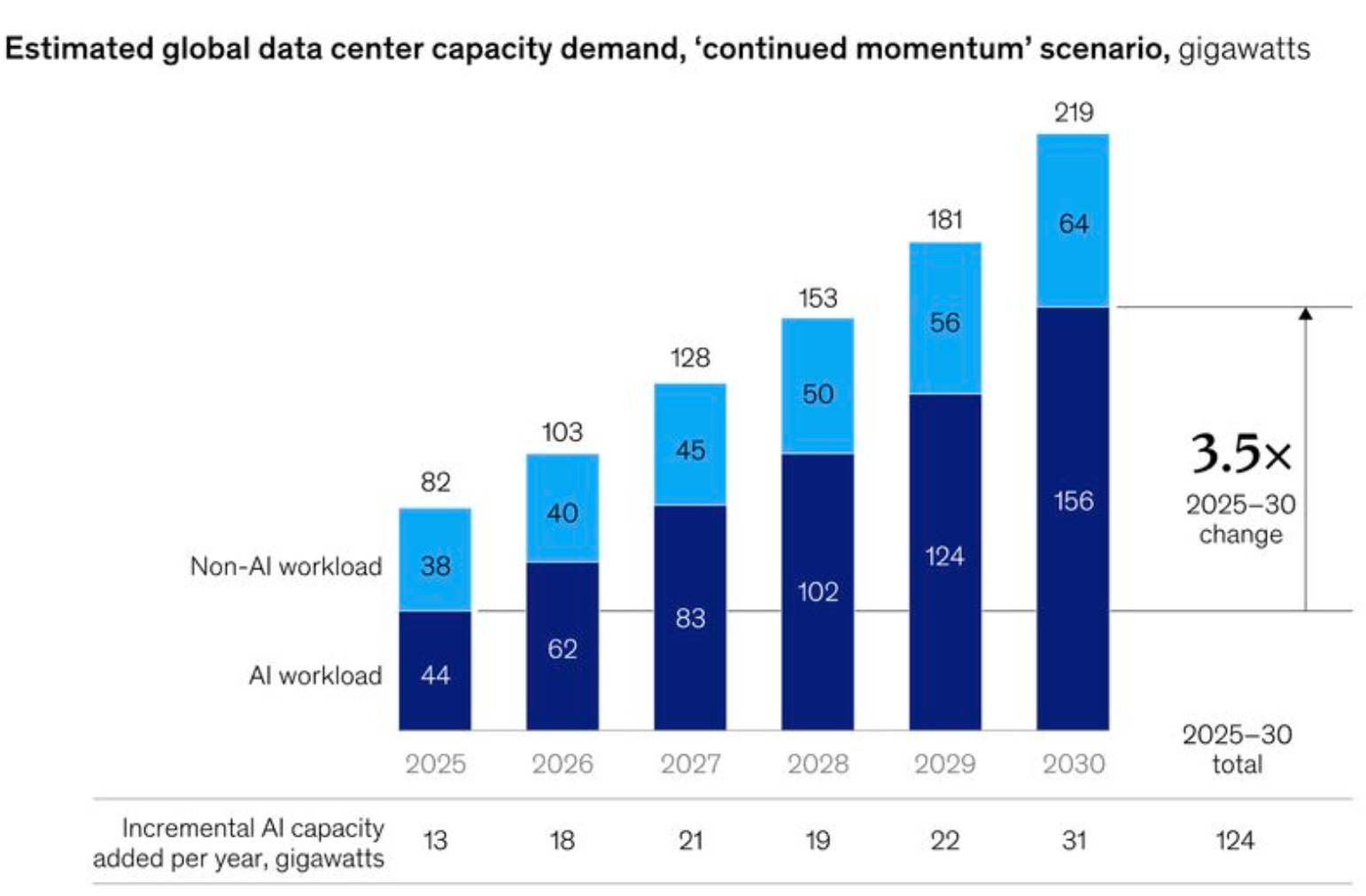
The world’s largest tech firms alone are on track to spend $364–$400 billion on AI infrastructure in 2025 (data centres, GPUs, servers).
Global data-centre capex is estimated to hit $1.2 trillion by 2029 — with AI workloads making up roughly half of that total.
According to McKinsey, the total build-out needed just for compute infrastructure by 2030 could reach $6.7 trillionglobally.
Energy demand tied to AI is dramatic: One forecast sees data-centre power demand rising by 165% from 2023 to 2030.
In Q1 2025 alone, global data-centre capex surged 53% year-over-year.
2. Why this looks like a bubble — and why that’s also OK
The speculative lens: Investors are pouring billions into potential future payoff that may not materialise in the near-term. For example: Bain & Co estimate that sustaining current infrastructure will require $2 trillion of annual revenue by 2030, yet even generous forecasts show an $800 billion revenue shortfall.
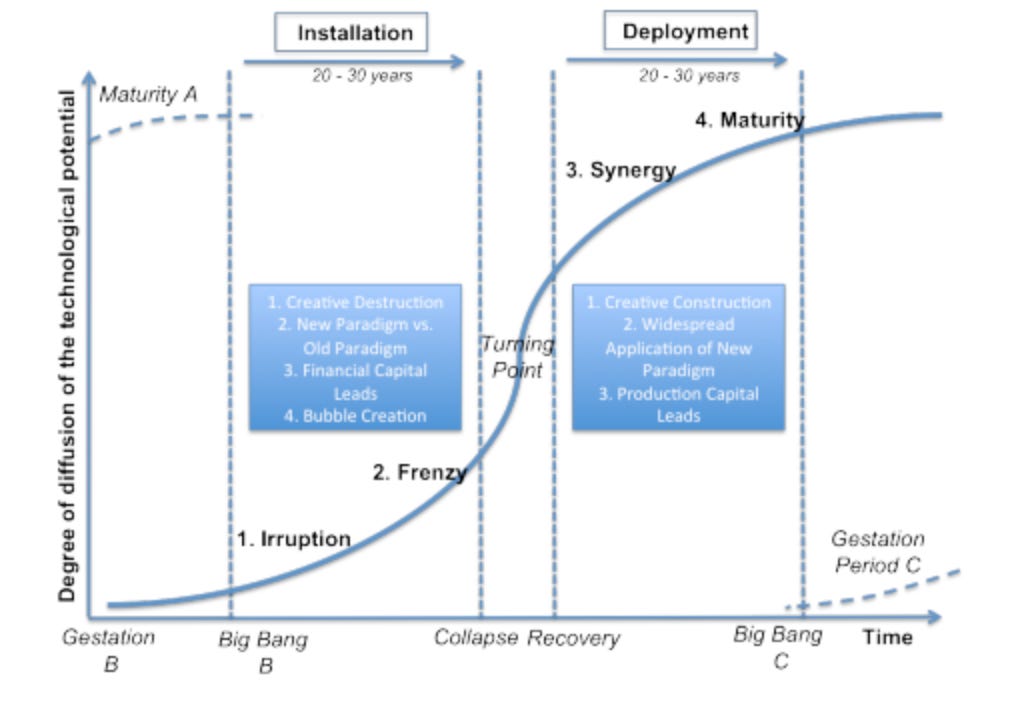
But this is what tech historian Carlota Perez calls the Installation Phase of a technological revolution: massive capital, over-capacity, lots of waste — followed by the Deployment Phase, where durable infrastructure remains and productivity is unlocked.
Infrastructure matters: The fibre-optic, data-centre, semiconductor build-out post-dot-com bust laid the groundwork for today’s cloud, mobile, and SaaS world. Here, the build-out is around AI, compute and power — exactly the kind of “bubble build” that paid off historically.
3. Infrastructure beyond chips
Chips are the marquee part of the story, but the real limit is power, cooling, real estate, logistics.
For example: The report flagged that by 2035 AI-data-centre demand could grow 30× from today’s level in terms of power draw.
Another forecast: AI-specific infrastructure by 2034 may hit 75 GW of new data centre capacity; total infrastructure spend passing $7 trillion.
4. The risk-return matrix
Upside: If you’re early in infrastructure you get first-mover advantage, you build the rails everyone else uses.
Downside: If the revenue or usage doesn’t ramp, you’ll be left with high fixed costs, under-utilised capacity, and capital depreciation.
Most investors now ask: Are we funding a productive boom, or simply financing yesterday’s capacity?
5. What it means for investors and innovation
For capital markets: The mania around AI is dragging capital away from low-growth sectors and redirecting it into physical asset build-outs and compute ecosystems. That may create new winners (fab plants, power utilities, logistics) beyond the obvious tech firms.
For innovation: A bubble committed to infrastructure means people, resources and risk-tolerance get allocated to “what could be,” not “what is.” That coordination effect (see Perez/Hobart & Huber) matters.
For society: The infrastructure built (chips, data-centres, power, networks) may repurpose into long-term productivity even if many firms fail.
6. The macro trade-off
“You don’t get upside without risking downside, and more often than not you get both at the same time.”
— Ben Thompson
And that holds here. The AI bubble may pop in parts, but what remains may matter more than what collapses.
7. Final takeaway
This isn’t purely speculative noise. It is speculation AND infrastructure build-out. The hype may be real, but so are the real-world foundations being laid now.
If the AI bubble has a purpose, it’s not to deliver massive returns today, but to build the enforcement-free rails for the next decade of innovation.
Meme of the Week
The world’s next trillion-dollar companies aren’t on the stock exchange — yet.

History’s biggest wealth creation happens before the IPO.
Don’t just read about it — own it.
Important Disclaimers